Why Sports Storytelling is One of the Most Important Creative Spaces Right Now
Why Sports Storytelling is One of the Most Important Creative Spaces Right Now
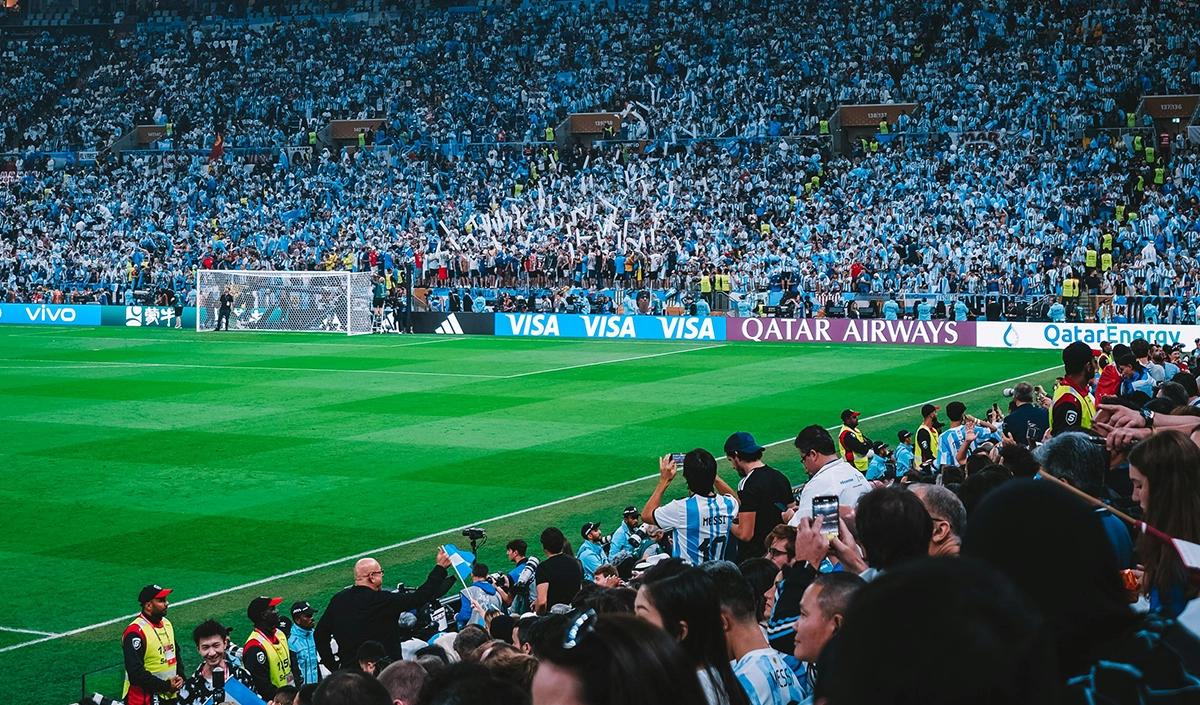
In 2026, the United States will host the largest World Cup in history.
It is not lost on me that the teams arriving on American soil will be stitched together, as they always have been, from the children and grandchildren of former colonial subjects.
The French squad will field roughly a dozen players of African heritage, with roots in Cameroon, Mali, Senegal, Algeria, and the Democratic Republic of the Congo. England will arrive with Black and mixed-race players whose families came on the Windrush ships or from Nigeria and Ghana. Belgium’s roster runs through the Congo it once colonized. These are Black and brown players who score winning goals for the so-called mother country and get monkey chants the next match.
They will play for nations whose people the United States currently bars from entry: Brazil, Colombia, Haiti, Senegal, Morocco, and Iran. They will play under the watch of an agency Milan’s mayor recently called “a militia that kills,” whose officer shot and killed Renée Good, an unarmed American citizen, in Minneapolis in January. They will play in a tournament FIFA projects will pull in $11 billion in revenue and contribute nearly $41 billion to global GDP. FIFA’s president has said, out loud, that he doesn’t understand the pushback against the administration’s policies, because the policies “are working.”
The United States vied for these games. It wanted the world to come. But the country welcoming the world is the same one rolling back voting rights, erasing Black history from public spaces, and undoing six decades of civil rights protections, refusing, even now, to reckon with the racism on which the spectacle depends. The country wants what these Black and brown bodies can produce: goals, jersey sales, and billions in television rights. Yet, their humanity, their families, their countries, and their histories must be circumscribed so that audiences can remain comfortable. And yet, most of us love the game.
That is the storytelling problem of this moment. How do you celebrate the game without flattening what it costs the people playing it? How do you indict the country without disappearing the players whose joy is real, whose brilliance is real, whose families are watching from places this same country is trying to keep out?
I am a storyteller. What I know about stories is this: sports is one of the last places in American life where meaning gets made in front of everyone at once, in real time, before the algorithm sorts us into our corners. The storyteller’s job is to refuse the version the spectacle wants told. To hold the goal and the chant together. The jersey and the deportation order. The billions in revenue and the agent at the window in Minneapolis.
Stories shape culture. Stories shift power. Stories are how we hold onto what matters when the spectacle wants us to forget. Sports storytelling, done with care, is where the culture argues with itself in public, with the whole world watching, over the question of whose humanity counts.

Most Sports Storytelling Isn’t Storytelling
Most Sports Storytelling Isn’t Storytelling Everyone in sports marketing says they want a stor